.webp)
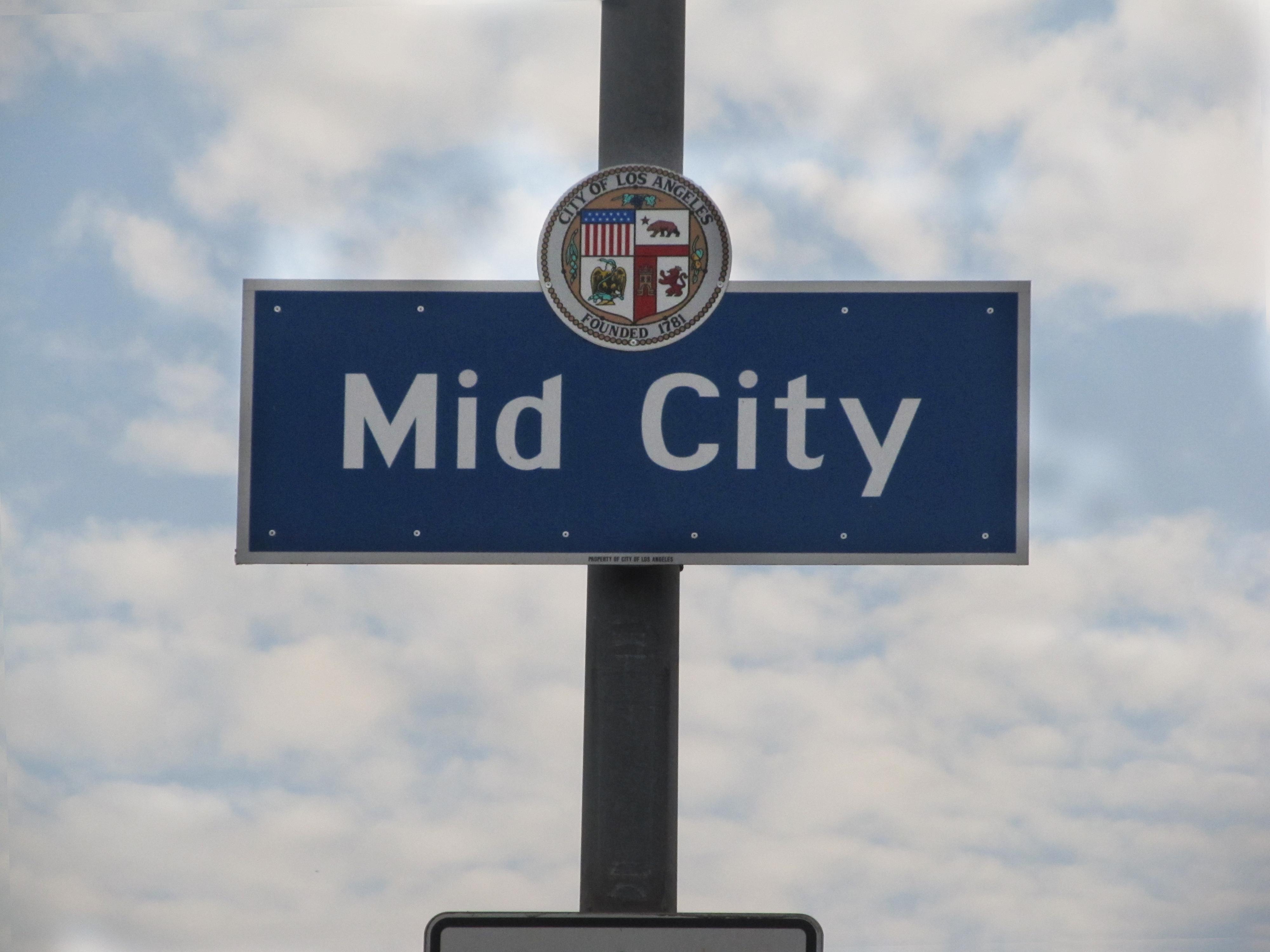
Mid City Los Angeles
Welcome to Home Point Appraisal, Your Trusted
Mid City Los Angeles
Real Estate
Appraiser
Mid City Los Angeles Appraisals Require Location-Sensitive Methodology Across HPOZ, Arterial, and Westside-Influence Gradients
Mid City Los Angeles is one of the most location-sensitive submarkets in central LA. Within a relatively compact footprint sit Historic Preservation Overlay Zone (HPOZ) enclaves of large single-family homes, denser apartment-and-multifamily blocks, walkable village pockets, and properties whose values are shaped by their distance from West Los Angeles. Treating Mid City as a single market produces values that miss the substantial block-by-block and corridor-by-corridor differentials that drive what each property actually trades for.
The methodology challenge in Mid City is recognizing three overlapping location sensitivities at once: which HPOZ a property sits in and what density mix surrounds it, which side of a major arterial (Pico, Venice, Washington) it sits on, and how far west it sits relative to the West LA market gravity. A Lafayette Square Spanish Revival north of Washington trades on completely different fundamentals than a property in the same neighborhood south of Washington. A Picfair Village Craftsman near La Cienega trades on different fundamentals than an interior Picfair property further east.
I’ve appraised Mid City Los Angeles across the HPOZ map and across the arterial and west-east gradients for over 25 years. The methodology requires honoring all three location sensitivities before any cross-area comparison.
About Mid City Los Angeles
Mid City Los Angeles is a residential corridor in central Los Angeles bounded roughly by Wilshire Boulevard to the north, Jefferson Boulevard and Adams Boulevard to the south, La Brea Avenue to the west, and Western Avenue to the east. The area lies between the Westside premium markets and Koreatown, with Pico Boulevard, Venice Boulevard, and Washington Boulevard running east-west through the corridor and producing meaningful neighborhood separations.
The housing stock concentrates on early-twentieth-century construction. The 1900s through 1930s saw the build-out of most Mid City blocks with Spanish Colonial Revival, Tudor Revival, Craftsman, and Mediterranean architecture. Mid-century construction filled in some blocks in the 1940s through 1960s, and significant multifamily and apartment inventory accumulated along the major corridors. Several sub-neighborhoods carry Historic Preservation Overlay Zone designations that protect both the architectural character and the dominant single-family residential character through design review requirements.
The buyer pool is heavily weighted toward architecture-conscious buyers who specifically seek the period inventory, family buyers, restoration enthusiasts, and creative professionals. Properties closer to the West LA market gravity draw additional buyer pools from the West Los Angeles, Beverly Grove, and Westwood markets.
Why Mid City Is One of the Most Location-Sensitive Markets in Central LA
Three overlapping location sensitivities drive Mid City value differentials. A defensible Mid City appraisal honors all three.
Location Sensitivity 1: HPOZ Enclaves Versus Surrounding Density
Mid City contains several HPOZ-designated enclaves where the overlay specifically protects the historic single-family residential character. Within these HPOZs, the housing stock concentrates on substantial single-family homes on larger lots with deep setbacks. Immediately outside the HPOZ boundaries, the density mix shifts toward smaller-lot single-family, apartment buildings, and multifamily inventory. The differential between an HPOZ block and an adjacent non-HPOZ block can be substantial even when measured in feet.
- Lafayette Square. One of the most significant HPOZ enclaves in Los Angeles. Large Spanish Revival, Tudor, and Mediterranean homes on oversized lots with deep setbacks. Tightly cohesive single-family character. Among the highest price tiers in Mid City.
- Oxford Square. HPOZ-designated with concentrated Spanish Revival and Mediterranean inventory. Strong single-family character distinct from adjacent denser blocks.
- Wellington Square. HPOZ-designated with substantial 1920s and 1930s homes maintaining consistent period and single-family character.
- Country Club Park. HPOZ-designated enclave near the historic Wilshire Country Club area. Substantial homes on landscaped lots. Single-family character distinct from surrounding density.
Comp pools for these HPOZ properties should anchor inside the HPOZ boundary and the matching single-family character. Pulling comps from adjacent denser apartment or smaller-lot blocks produces values that don’t reflect what the HPOZ buyer pool actually pays.
Location Sensitivity 2: Arterial Boundary Effects (Pico, Venice, Washington Boulevards)
Three major east-west arterials thread Mid City and create meaningful neighborhood separations where values differ block-by-block.
- Pico Boulevard. Northern arterial through Mid City. Properties north of Pico generally command higher prices than properties south of Pico within the same nominal neighborhood.
- Venice Boulevard. Central arterial. Properties north of Venice generally command higher prices than properties south of Venice.
- Washington Boulevard. Southern arterial through Mid City. Properties north of Washington generally command higher prices than properties south of Washington.
The pattern is consistent: in Mid City, properties further north of each arterial generally trade at higher price points than otherwise comparable properties further south. The differentials are not just about distance from these streets but reflect block-by-block character separations driven by the corridors themselves. Comp selection should respect which side of each arterial the subject sits on, even when the nominal neighborhood name is shared.
Location Sensitivity 3: West-East Gradient (West LA Market Influence)
The further west in Mid City a property sits, the more it draws from the West Los Angeles market gravity and the higher its price band tends to be. Properties on the western edge of Mid City (closer to La Cienega Boulevard, Fairfax Avenue, and the West LA market) benefit from buyer-pool overlap with West Los Angeles, Beverly Grove, Carthay, and the adjacent Westside premium markets. Properties on the eastern edge of Mid City (closer to Western Avenue and Koreatown) operate more on central LA market dynamics.
The west-east gradient is meaningful for appraisal methodology because:
- Westside buyer pool overlap. Western Mid City properties attract buyers who would otherwise compete for West Los Angeles, Beverly Grove, or Carthay inventory. This produces a different price band than properties further east.
- Walkability and commercial corridor proximity. Western Mid City properties typically have walking access to West LA-adjacent commercial.
- Comp pool sourcing. A defensible appraisal for a western Mid City property may legitimately include cross-corridor comps from adjacent Westside markets when calibrated, while a property in the eastern Mid City should anchor on central LA comp pools.
Mid City Sub-Neighborhoods
- Lafayette Square. Premier HPOZ enclave. Large single-family Spanish Revival, Tudor, and Mediterranean inventory.
- Wellington Square. HPOZ. Substantial 1920s and 1930s residential.
- Victoria Park. Historic enclave with strong period inventory and tree-lined streets.
- Country Club Park. HPOZ enclave with substantial homes on landscaped lots.
- Arlington Heights. Mixed residential between the major commercial corridors. Variety of housing types and price points.
- Brookside. Smaller residential pocket with consistent character.
- Faircrest Heights. Established mid-century and earlier residential on the western edge of Mid City. Western edge benefits from West LA gravity.
- Oxford Square. HPOZ. Spanish Revival and Mediterranean inventory.
- Picfair Village. Smaller residential pocket south of Pico. Craftsman bungalow concentration.
For nearby walkable village areas in the broader Mid-Wilshire/Hancock Park corridor, see our Larchmont page. For the Beverly-Fairfax-3rd Street pocket on the northwestern edge, see our Beverly Grove page. For the western HPOZ adjacent to Mid City, see our Carthay page.
Common Mid City Appraisal Scenarios
- Probate and Date-of-Death Valuations. Mid City has many multi-generational owners whose families purchased decades ago. Date-of-death appraisals establish the IRS step-up basis, significant given Mid City’s appreciation, particularly within HPOZ enclaves.
- Estate Planning and Trust Valuations. Trust appraisals support gift tax planning and stepped-up basis purposes. Mid City HPOZ trust portfolios often involve substantial single-family inventory.
- Divorce. Family law appraisals in Mid City require HPOZ-aware, arterial-aware, and west-east-gradient-aware methodology. HPOZ inclusion, arterial side, and west-east position frequently become contested points in family court.
- Pre-Listing Valuations. Sellers benefit from an independent valuation. Mid City automated valuation models routinely miss HPOZ premium, cross-arterial differentials, and west-east gradient.
- ARV for Renovation Projects. Mid City renovation projects must factor HPOZ review requirements (for HPOZ properties) and the location-specific market dynamics. ARV analyses use comparable in-HPOZ, in-arterial-zone, in-west-east-position projects.
Why Choose Home Point Appraisal for Mid City Los Angeles
Mid City appraisals require an appraiser who knows the HPOZ map, recognizes the single-family-versus-density character distinctions, respects the arterial boundary effects of Pico, Venice, and Washington Boulevards, and calibrates correctly for the west-east West LA gravity gradient. You get:
- USPAP-compliant reports built for IRS, court, and lender scrutiny.
- Direct access to me. No outsourced inspections, no junior appraisers.
- Location-sensitive comp analysis that honors HPOZ, arterial, and west-east gradients.
- 3 to 5 business day standard turnaround. Rush options available for court or estate deadlines.
Mid City Landmarks That Affect Property Value
- Wilshire Boulevard corridor. Northern boundary. Major east-west commercial spine.
- Pico Boulevard. Northern Mid City arterial driving block-by-block separation between north-of-Pico and south-of-Pico properties.
- Venice Boulevard. Central Mid City arterial driving block-by-block separation between north-of-Venice and south-of-Venice properties.
- Washington Boulevard. Southern Mid City arterial driving block-by-block separation between north-of-Washington and south-of-Washington properties.
- Miracle Mile museum row. Just north of Mid City. LACMA, the Petersen Museum, and the Academy Museum. Cultural anchor.
- Wilshire Country Club. Driver of premium for adjacent residential (eastern Country Club Park).
- Larchmont Village. Walkable village adjacent to Hancock Park, drawing demand into northern Mid City.
- Multiple HPOZ designations. Lafayette Square, Oxford Square, Wellington Square, Country Club Park, and others. Architectural protection and single-family character preservation.
- La Brea Avenue. Western Mid City boundary. Western edge benefits from West LA market gravity.
- Metro Purple Line extension. Transit improvements affecting walkability premium for nearby properties.
Get Your Mid City Los Angeles Appraisal Started
Call 213-739-9267 or click the red button below for an instant quote. Most Mid City appraisals are completed in 3 to 5 business days. Rush options are available for time-sensitive court or estate deadlines.
Save $50 with code 50WEB25 at checkout.
Why Choose Home Point Appraisal?
With over 25+ years of experience in the SoCal real estate industry, we have expertise and knowledge of your local market. Call us for fast response or click the button below to get an instant quote.
GET INSTANT PRICING NOW

.webp)