.webp)
Torrance
Welcome to Home Point Appraisal, Your Trusted
Torrance
Real Estate
Appraiser
Torrance Appraisals Require Beach-Distance and Sub-Tract Methodology
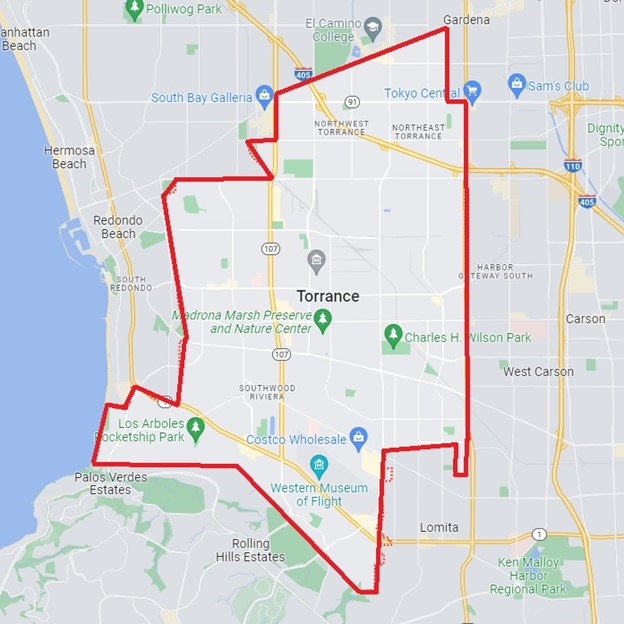
Torrance is one of the largest cities in the South Bay and one of the most internally varied in Los Angeles County. The city spans from beach-adjacent hillside premium properties in the Hollywood Riviera to inland tract neighborhoods six miles from the coast. The price gradient from west to east is one of the most pronounced in any single city in Southern California, and that distance-to-coast gradient is the central methodology consideration for Torrance appraisals.
The mistake outside appraisers commonly make in Torrance is pulling comps from across the city without accounting for which beach-distance band the subject property sits in. A home in the Hollywood Riviera trades on completely different fundamentals than a home in Walteria or North Torrance, even though all three are technically in the same city. A defensible Torrance appraisal recognizes the distance-to-coast gradient and selects comps from within the subject’s band.
I’ve appraised Torrance and the adjacent South Bay corridor (Lawndale to the north and Lomita to the south) across most sub-areas for over 25 years. The methodology requires recognizing where on the gradient the subject sits and how the surrounding cities relate to the Torrance market.
About Torrance
Torrance is a large city of approximately 145,000 residents in the South Bay region of Los Angeles County, incorporated in 1921. The city covers roughly 20 square miles and spans from the Pacific Ocean to the inland flatlands, with significant variation in topography, architecture, and price across that span. Torrance is bordered to the north by Lawndale and Redondo Beach, to the south by Lomita and the Palos Verdes Peninsula, to the east by Carson, and to the west by the Pacific Ocean and Redondo Beach. Home Point Appraisal covers Torrance plus the adjacent Lawndale and Lomita markets.
The housing stock is unusually diverse for a single city. Old Torrance, centered around the original downtown grid, contains early 20th-century homes including Craftsman bungalows and Spanish colonial styles. The expansive mid-century tracts that filled in during the 1950s and 1960s dominate North Torrance, Walteria, Southwood, and other planned subdivisions. The Hollywood Riviera section, on the western coastal hillside, contains higher-end custom and semi-custom homes with ocean views. Newer developments and townhome communities round out the inventory.
The city has strong school district draws, particularly in certain Torrance Unified School District attendance areas, which adds another layer of micro-market dynamics on top of the broader beach-distance gradient.
Why Torrance Appraisals Require Beach-Distance Awareness
The price gradient from coast to inland is the dominant value driver in Torrance, and it operates in bands rather than as a smooth slope. The methodology requirements:
- Hollywood Riviera band. Properties on the coastal hillside trade on ocean views, beach-walkability, and the premium of the Hollywood Riviera address. Comps from outside this band don’t reflect what these buyers will pay.
- West Torrance band (beach-adjacent flatlands). Properties in Walteria, Seaside Ranchos, and adjacent areas trade on relative proximity to the beach and to the Hollywood Riviera value gravity. Different fundamentals than the hillside band but related.
- Old Torrance and Madrona band. The historic core trades on architectural character and original downtown walkability. Distinct from the tract sub-markets.
- Central Torrance tract band (Southwood, etc.). Mid-century tract neighborhoods trade on family demand, Torrance Unified School District considerations, and tract consistency.
- North Torrance band. Inland and closer to the 405 and to Lawndale. Different price level and different buyer pool than the more coastal bands.
- Adjacent city boundary effect. Lawndale to the north and Lomita to the south operate as distinct jurisdictions with different school districts and different market dynamics. Treating an adjacent Lawndale or Lomita home as a comparable for a Torrance home (or vice versa) without adjustment produces values that don’t survive scrutiny.
A defensible Torrance appraisal anchors comps inside the subject’s band first, then expands carefully only when in-band inventory is insufficient.
Torrance Sub-Areas
Beyond the beach-distance bands, several recognizable sub-areas matter:
- Hollywood Riviera. Coastal hillside neighborhood with the highest values in the city. Ocean views, beach walkability, and architectural prestige drive premiums.
- Old Torrance. Original downtown grid and surrounding historic blocks. Craftsman and Spanish colonial inventory. Walking distance to Old Torrance commercial.
- Walteria. Western tract neighborhood adjacent to the Riviera. Strong family demand.
- Southwood. Central mid-century tract with consistent ranch inventory.
- Madrona. South-central residential area. Mix of older and mid-century homes.
- North Torrance. Inland flatlands. Larger tract inventory, generally lower price band.
- South Shores. Coastal area along Palos Verdes border.
Neighboring Areas We Cover Under Torrance
Torrance sits at the center of a contiguous South Bay corridor of cities that share regional dynamics but operate as separate jurisdictions with separate school districts and distinct market profiles. Home Point Appraisal covers the full corridor with the same beach-distance and sub-tract methodology, calibrated to each city’s specific market structure:
- Lawndale. Immediately north of Torrance in LA County, situated between Torrance and Hawthorne along the 405 Freeway corridor. Lawndale is a smaller city of approximately 32,000 residents covering just under two square miles. The city is served by the Lawndale Elementary School District (a separate district from Torrance Unified) and the Centinela Valley Union High School District. The housing stock is heavily concentrated in 1950s and 1960s single-family residential with significant multifamily inventory along the major commercial corridors. Lawndale generally trades at meaningfully lower price bands than adjacent North Torrance, reflecting the smaller lot sizes, the different school district, and the denser multifamily mix. Comp pools should anchor on in-Lawndale inventory and account for the school district differential rather than cross-pulling from Torrance.
- Lomita. Immediately south of Torrance in LA County, situated between Torrance and the Palos Verdes Peninsula/San Pedro. Lomita is a small, quiet residential city of approximately 21,000 residents covering just under two square miles. Most of the city is served by the Los Angeles Unified School District despite being a separately incorporated municipality, which produces market dynamics distinct from Torrance Unified-served properties. The housing stock is primarily mid-century single-family on smaller lots, with some hillside residential in the southern sections climbing toward Rancho Palos Verdes. Lomita trades at lower price points than adjacent South Torrance or Palos Verdes but offers proximity to both. The Lomita Railroad Museum is a notable local landmark. Comp pools should anchor on in-Lomita inventory and respect the LAUSD vs Torrance Unified school district differential.
Common Torrance and South Bay Appraisal Scenarios
The work I do across Torrance, Lawndale, and Lomita typically falls into a few categories.
- Probate and Date-of-Death Valuations. Torrance, Lawndale, and Lomita have many long-term owners across their established residential neighborhoods. Date-of-death appraisals establish the IRS step-up basis, often saving heirs significant capital gains tax given decades of South Bay appreciation.
- Estate Planning and Trust Valuations. Trust-held properties are common throughout the South Bay corridor, especially in the Hollywood Riviera and Old Torrance areas. Trust appraisals support gift tax planning and stepped-up basis purposes.
- Divorce Valuations. South Bay properties are often the largest community asset in a divorce. The beach-distance band methodology, school district differentials, and Lawndale or Lomita boundary effects often become contested points in family court.
- Pre-Listing Valuations. Sellers preparing to list benefit from an independent valuation that correctly handles the band-by-band gradient and recognizes the adjacent-city distinctions. Automated valuation models routinely cross-compare across bands and across city boundaries and miss the distinctions.
- After Repair Value (ARV) for Renovation Projects. The Torrance corridor has active flip and major-renovation activity, particularly in older Walteria, Old Torrance, and Lomita areas. ARV appraisals analyze what planned renovations will produce in market value once completed, accounting for the relevant in-city comp pool.
Why Choose Home Point Appraisal for Torrance and the South Bay Corridor
Torrance, Lawndale, and Lomita appraisals require an appraiser who understands the beach-distance gradient, the multiple school districts (Torrance Unified, Lawndale Elementary, Centinela Valley Union High, Los Angeles Unified), and the sub-tract distinctions that drive value across these contiguous but distinct cities.
When you hire Home Point Appraisal for a Torrance, Lawndale, or Lomita property, you’re getting:
- USPAP-compliant reports built for court, IRS, and lender scrutiny.
- Direct access to me. No outsourced inspections, no junior appraisers.
- Band-aware and city-aware comp analysis that respects the distance-to-coast gradient and the jurisdictional differentials.
- 3 to 4 business day standard turnaround on most reports.
Torrance and South Bay Landmarks That Affect Property Value
- The Pacific Ocean. Torrance’s western boundary and the dominant value driver. Beach-distance is the single biggest price gradient in the city.
- The Hollywood Riviera commercial district. Riviera Village commercial center. Walkability premium for surrounding hillside properties.
- Wilson Park. Major community park. Positive value driver for adjacent residential.
- Del Amo Fashion Center. Major regional mall. Commercial anchor for central Torrance.
- The 405 Freeway. Eastern access corridor through Torrance, Lawndale, and Lomita. Convenience premium for inland properties but noise considerations directly adjacent.
- Old Torrance commercial. Historic downtown commercial. Walkability premium for surrounding historic residential.
- Torrance Unified School District. Strong district reputation in specific attendance areas drives family-buyer premium.
- Lawndale Elementary and Centinela Valley Union High School Districts. Serve Lawndale residential. Different premium structure than Torrance Unified.
- Lomita Railroad Museum. Notable local cultural anchor for Lomita.
- Palos Verdes Peninsula border. Southern boundary of Lomita and South Torrance. Hillside premium for properties oriented toward the peninsula.
Get Your Torrance Area Appraisal Started
Call 213-739-9267 or click the red button below for an instant quote. Most appraisals across Torrance, Lawndale, and Lomita are completed in 3 to 4 business days. Rush options are available for time-sensitive court or estate deadlines.
Save $50 with code 50WEB25 at checkout.
Why Choose Home Point Appraisal?
With over 25+ years of experience in the SoCal real estate industry, we have expertise and knowledge of your local market. Call us for fast response or click the button below to get an instant quote.
GET INSTANT PRICING NOW

.webp)