.webp)
Wilshire Corridor
Welcome to Home Point Appraisal, Your Trusted
Wilshire Corridor
Real Estate
Appraiser
Wilshire Corridor Home Appraisals Require Condo-Specific Methodology
Wilshire Corridor is one of the few neighborhoods in Los Angeles where single-family appraisal methodology doesn’t apply at all. Almost every property here is a high-rise condominium, and the dynamics that drive value in condo towers are fundamentally different from what drives single-family values.
This is the most common mistake outside appraisers make when they take a Wilshire Corridor assignment. They pull comps from “nearby condos” without understanding which buildings are actually comparable, which floor heights command which premiums, how HOA fees affect the underlying market value, and how the orientation of the unit changes the buyer pool. The result is a valuation that doesn’t survive lender scrutiny, doesn’t hold up in family court, and doesn’t give the client the documentation they actually need.
I’ve worked Wilshire Corridor appraisals for over 25 years across most of the major buildings in the strip. The methodology is precise, and getting it right matters.
About the Wilshire Corridor
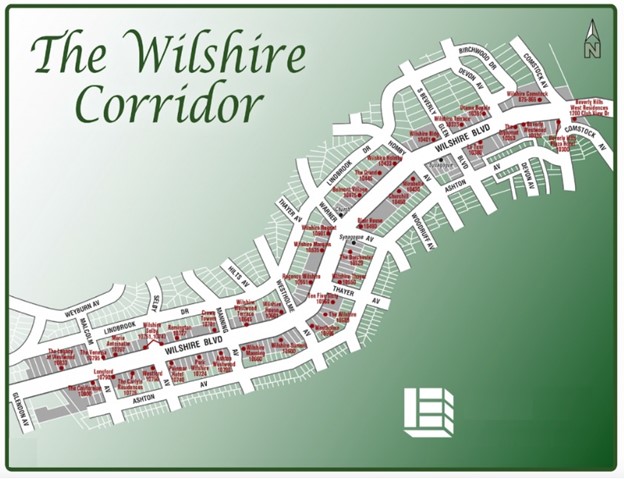
The Wilshire Corridor is a roughly two-mile stretch of Wilshire Boulevard between Westwood Village to the west and Beverly Hills to the east. The corridor contains some of the highest-valued condominium addresses in Los Angeles, often referred to as “Condo Canyon” or “Millionaire’s Mile” for the concentration of luxury high-rise towers that line both sides of the street.
The corridor stands out from the rest of Los Angeles for two reasons. First, the housing stock is overwhelmingly high-rise condominium, not single-family. Second, the buildings span a remarkable range of architectural eras and styles. You’ll find mid-century towers from the 1960s and 1970s alongside Art Deco-inspired designs, modern glass-and-steel construction from the 1980s and 1990s, and contemporary high-rises completed in the 2000s and later. Some buildings carry historic significance. Others were built specifically as ultra-luxury developments.
The diversity matters for appraisal because no two Wilshire Corridor buildings are interchangeable. Each one has its own architectural identity, its own amenity package, its own HOA structure, and its own buyer pool. Treating “Wilshire Corridor condos” as a single market produces values that don’t match what the actual market does.
Why High-Rise Condo Appraisals Are Different
Single-family appraisal methodology relies on comparable sales from the surrounding neighborhood. The appraiser looks at recent sales of similar homes, makes adjustments for differences in lot size, square footage, condition, and features, and arrives at a supportable value.
That methodology doesn’t translate to high-rise condos. The proper Wilshire Corridor methodology requires:
- Single-building comp selection. The most reliable comparable sales come from inside the same building. Two units in different towers, even towers across the street from each other, often trade on different fundamentals. The strongest valuations are anchored to sales within the same building going back as far as recent history allows.
- Floor-by-floor adjustments. A unit on a high floor commands a measurable premium over the same floor plan on a lower floor in the same building. The premium isn’t linear, and it depends heavily on what’s outside the window. North-facing high floors that look toward the Santa Monica Mountains value differently than south-facing high floors that look toward downtown.
- View orientation analysis. Beyond floor height, the direction the unit faces matters significantly. A unit with a clear ocean view on a clear day values differently than a unit looking toward the city. A unit facing the Los Angeles Country Club has an unobstructed permanent view. A unit facing an adjacent building has different market appeal.
- HOA fee impact. Wilshire Corridor HOA fees often run into the thousands of dollars per month. Higher HOA fees, even when they fund extensive amenities, affect the unit’s market value because they reduce the buyer’s monthly affordability calculation. A unit in a building with a higher monthly HOA values differently than a comparable unit in a building with a lower HOA.
- Building amenities valuation. Full-service buildings with 24-hour concierge, valet parking, doormen, pools, gyms, and security command premiums over more basic buildings. The amenity package needs to be analyzed and adjusted for when comparing across buildings.
- Ownership structure considerations. Most Wilshire Corridor buildings are conventional condominium ownership, but some older buildings were originally co-ops or have unusual ownership arrangements. The structure affects financing, transferability, and ultimately value.
Sub-Areas Within the Corridor
The corridor itself splits roughly into two sub-areas, anchored at the Westwood end and the Beverly Hills end:
- The Westwood end. The western portion of the corridor sits closer to UCLA, Westwood Village, and the Los Angeles Country Club. Properties here have walking access to the Westwood commercial district and the UCLA campus. Many buildings on this end have ocean views to the west on clear days.
- The Beverly Hills end. The eastern portion of the corridor borders Beverly Hills proper. Properties here have closer proximity to the Beverly Hills shopping district and Wilshire commercial corridor. Buyer demographics on this end often skew toward different priorities than the Westwood end.
Both ends contain ultra-luxury buildings, but the buyer pool and value drivers differ. A defensible Wilshire Corridor appraisal recognizes which end the building sits on and selects comps accordingly.
Common Wilshire Corridor Appraisal Scenarios
The work I do in the Wilshire Corridor typically falls into a few categories.
- Probate and Date-of-Death Valuations. Many Wilshire Corridor units have been owned by long-term residents whose estates are now passing through probate. The date-of-death appraisal anchors the IRS step-up basis for the heirs and can save significant capital gains tax when the unit eventually sells.
- Estate Planning and Trust Valuations. Many corridor units are owned through trusts. Trust appraisals support gift tax planning, generation-skipping transfer tax filings, and stepped-up basis purposes.
- Divorce Valuations. Wilshire Corridor units are often the marital home or a significant marital asset in divorces. The valuations require careful documentation of building, floor, view, and unit-specific factors that hold up to scrutiny in family court.
- Pre-Listing Valuations. Sellers preparing to list often want an independent valuation to set realistic expectations before going to market. Wilshire Corridor sellers in particular benefit because automated valuation models routinely miss the floor and view premiums that drive value here.
Why Choose Home Point Appraisal for the Wilshire Corridor
Wilshire Corridor appraisals require an appraiser who understands the building-by-building, floor-by-floor dynamics that drive value here. That means knowing the architectural eras represented in the strip, understanding how HOA structures affect value, and recognizing which view orientations command which premiums.
When you hire Home Point Appraisal for a Wilshire Corridor property, you’re getting:
- USPAP-compliant reports built for IRS, court, and lender scrutiny.
- Direct access to me. No outsourced inspections, no junior appraisers.
- Discrete handling appropriate for high-value properties.
- 3 to 4 business day standard turnaround on most reports.
Landmarks That Affect Wilshire Corridor Property Value
- Los Angeles Country Club. The country club’s golf course frontage along the south side of Wilshire creates permanent open-view orientations for north-facing units in many corridor buildings. The view is a meaningful value driver.
- UCLA and Westwood Village. The corridor’s western anchor. Properties at this end command walkability premiums for access to the village commercial district and the university.
- Beverly Hills. The corridor’s eastern anchor. Properties at this end carry the prestige of the Beverly Hills border and access to its commercial corridor.
- Wilshire Boulevard frontage itself. Unlike many luxury neighborhoods, Wilshire Corridor properties sit directly on a major commercial corridor. Higher floors are essential because lower floors face street-level traffic and noise that affects livability and value.
Get Your Wilshire Corridor Appraisal Started
Call 213-739-9267 or click the red button below for an instant quote. Wilshire Corridor appraisals are typically scheduled within 48 hours, with the completed report delivered 3 to 4 business days after inspection.
Save $50 with code 50WEB25 at checkout.
Why Choose Home Point Appraisal?
With over 25+ years of experience in the SoCal real estate industry, we have expertise and knowledge of your local market. Call us for fast response or click the button below to get an instant quote.
GET INSTANT PRICING NOW

.webp)